Our history
Storytelling
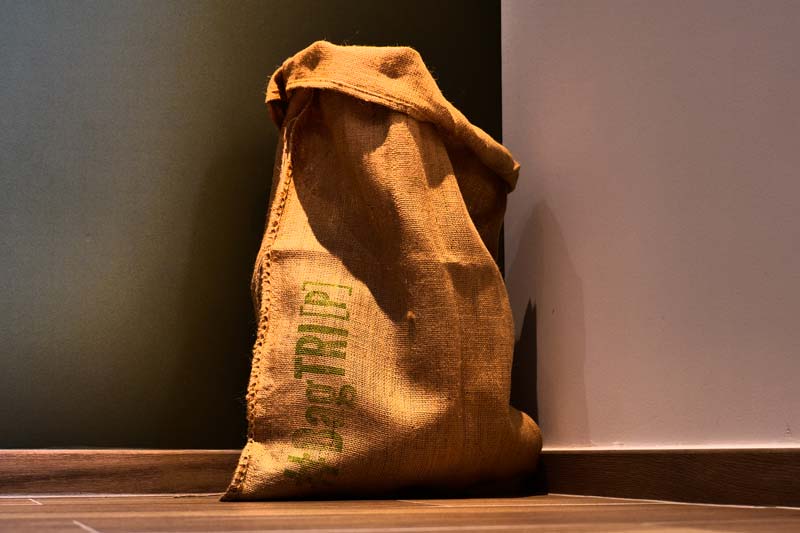
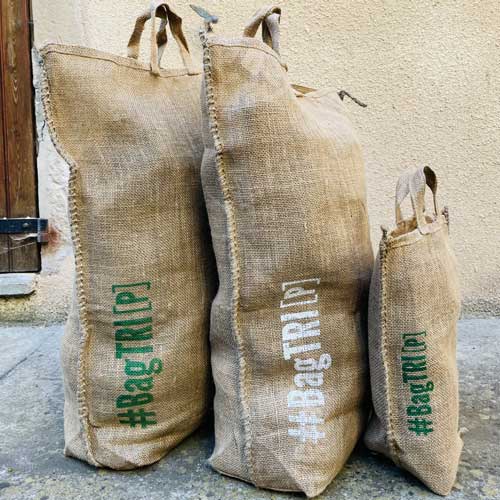
In fact, it had already been a few years since we replaced the yellow trash bag with a supermarket shopping bag. Being both concerned about the environment and Pauline being a fan of decoration, we were always looking to find a bag that could combine durability, aesthetics and limit the impact of plastic waste on the planet.
It was the burlap sack of Christmas decorations that made us realize that it could meet these expectations.
Our engagements
We ensure that our suppliers' jute canvas is manufactured in factories and workshops certified by the labels: GOTS & SEDEX which guarantee ethical trade and organic textile products. The JAS ANZ label; ensures decent and respectful working conditions for employees (safety, salaries, leave, well-being, etc.)
It is urgent and necessary to change our lifestyles and consumption to preserve our planet.
Bag Tri[p]
Natural jute fiber
For centuries, jute has been used to make billions of transport bags for foodstuffs, from potatoes to coffee, these 100% biodegradable bags have left no trace in our environment, unlike plastic which will pollute us for several more centuries.
As for transport you will tell us; well, 1 container arriving by sea consumes 163 kg vs. 1 thermal car which does the same number of km in the year, i.e. 10,000 km; 2.1 tonnes of CO2.
It is 100% biodegradable and helps limit plastic consumption; it is the oldest plant fiber in the world
It is durable; it is an ecological material that does not pollute the environment

It consumes little water for its production, which makes it a more ecological element than the others

It is versatile and can serve several functions: bag, decoration, etc.

It is aesthetic; with its authentic and natural side
Offers
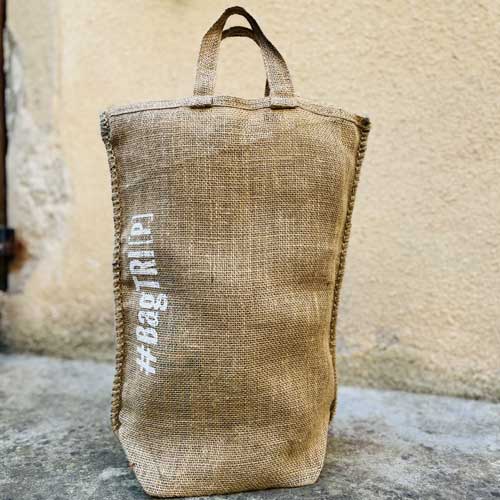
Single bag
1 bag
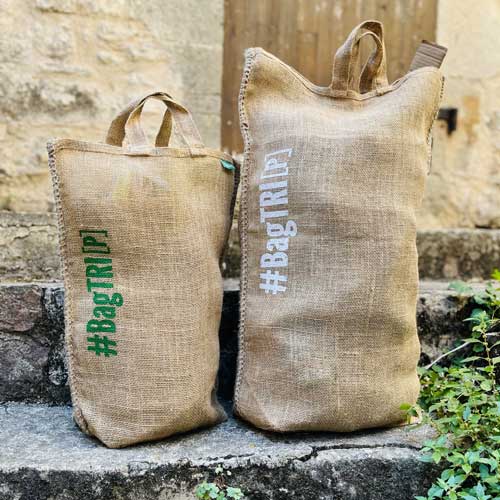
Pack duo
2 bags